You've tried candles. You've tried essential oils.
They make the room smell nice. But sometimes that's not what you need.
What you need is a reason to stop — not a reason to make the room prettier while you keep going.
Chinese incense isn't about fragrance filling a space. It's about the moment you light it. The flame. The thin curl of smoke. And the permission to do absolutely nothing for the next thirty minutes.
No apps. No timers. The incense tells you when time is up — when the ember reaches the holder and quietly goes out.
That's it. That's the whole point.
What Makes It Different
Most incense you've seen has a bamboo stick inside — it burns fast, smells smoky, and leaves ash everywhere.
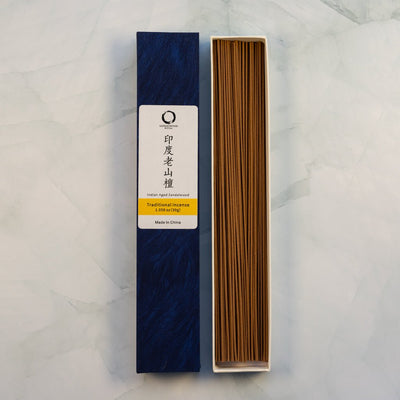
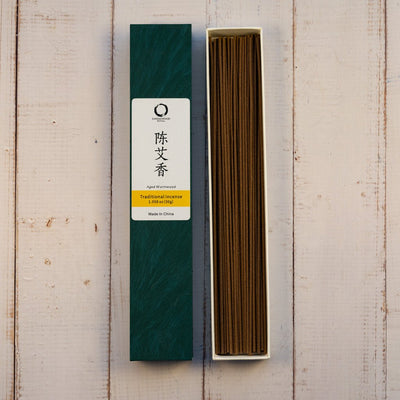
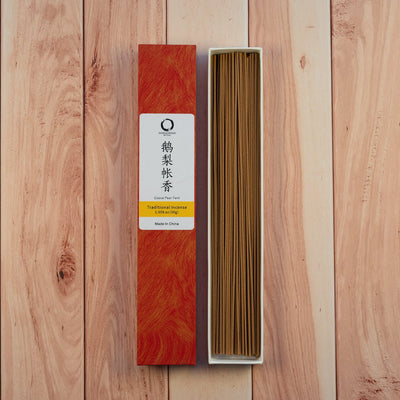
Chinese incense is different. It's made from natural plant materials — sandalwood, mugwort, aged fruit essences — ground into powder and pressed into solid sticks with no core. No bamboo. No chemical binders. No synthetic fragrance.
What you get is pure: the actual scent of the wood, the herb, the fruit. Slower, softer, and far more nuanced than anything that comes from a factory.
One stick burns for about thirty minutes. That's not a coincidence — it's about the length of time your brain needs to shift from doing to being.
Lighting the Incense
Place it in the holder
Insert the incense stick into the hole of your holder. Make sure it stands upright and stable.
Light the tip
Bring a flame to the very tip. Let it catch for 2–3 seconds.
Fan out the flame
Gently wave your hand or blow softly to extinguish the flame. You should see a small glowing ember — that's it working.
Resting the Incense
Here's what surprises most first-timers: you don't need to put it out.
When you're done — or when you simply want the scent to fade — place the incense into the hole of your holder. Without air feeding the ember, it extinguishes on its own. Quietly. Cleanly. No snuffing. No wet fingers. No ash trail.
If you want to enjoy the full session, just let it burn. One stick, roughly thirty minutes, and it will rest itself.
The Holder: Not Optional
You might think a holder is just an accessory. It's not. Here's why, in order of importance:
-
1
Safety — You need it.
An incense stick without a holder will fall. It will burn your table, scorch your book, or roll onto something it shouldn't. A holder keeps the ember upright and contained. Non-negotiable.
-
2
Cleanliness — You'll appreciate it.
Incense ash is fine and goes everywhere — on your desk, in your keyboard, between the pages of whatever you were reading. A holder catches the ash as it falls. Your surfaces stay clean.
-
3
Intention — You'll understand it.
Beyond function, a holder is what turns "burning a stick" into a moment. Our three holders each carry a different feeling.
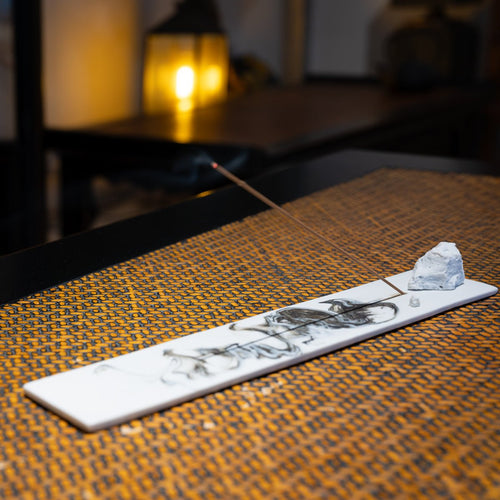
Distant Mountain
For when you need perspective
Ink-wash ceramic with open space — like looking at a mountain from far away. The white invites your mind to wander.
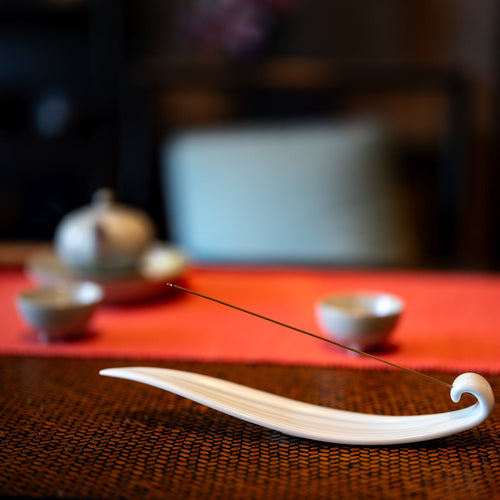
A Single Leaf
For when you need simplicity
Matte white, curved like a leaf. Nothing extra. Just the essentials — the stick, the ash, the quiet.
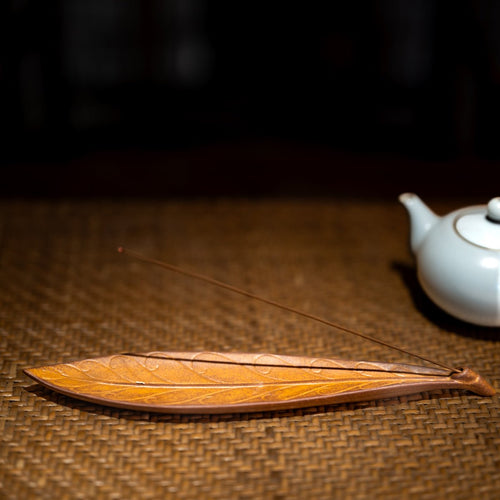
Autumn Return
For when you need to come home
Dark-toned, weathered, like a path back to something familiar. The one you reach for at the end of a long day.
That's It. Two Things.
A stick of incense. A holder. No incense lore. No ceremony manual. No learning curve. You light it. You let it burn. You let it go out. Somewhere in those thirty minutes, you might find something you forgot you were looking for.
Find Your First Set →